
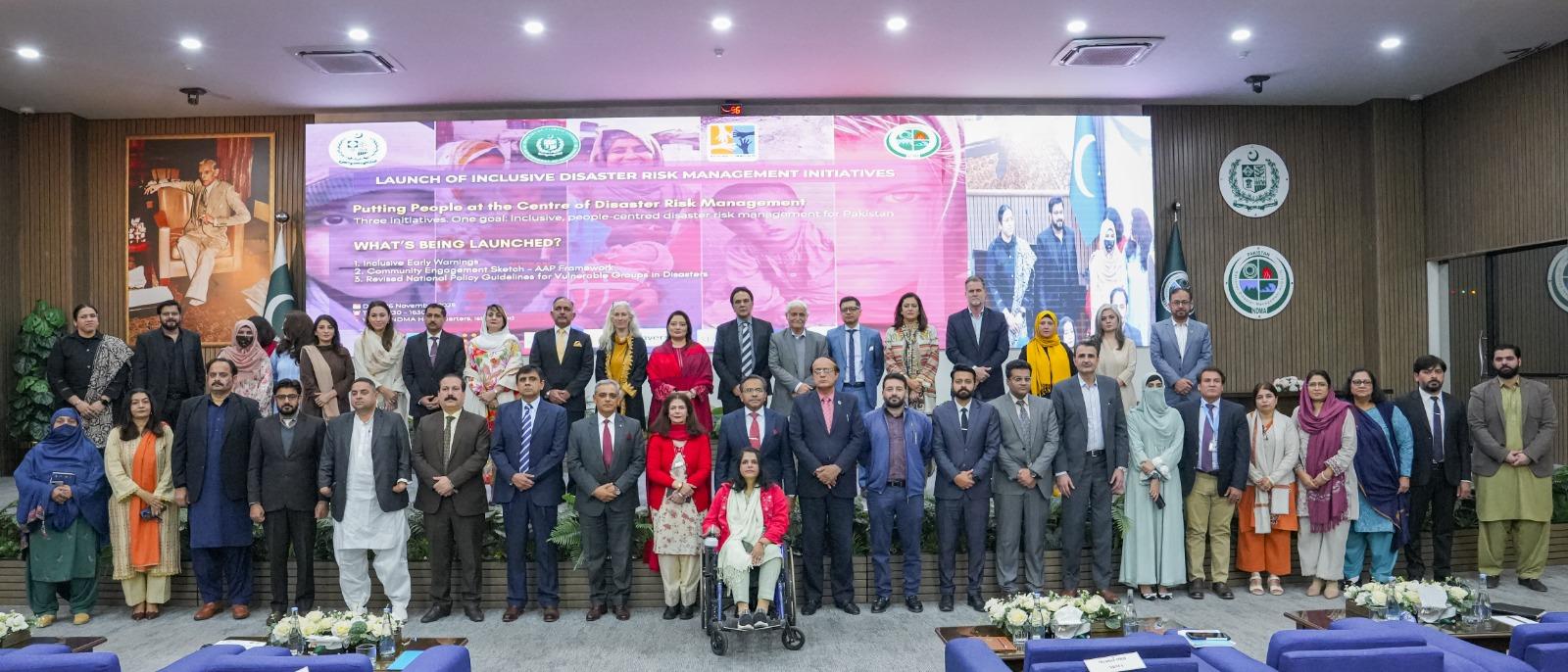
NDMA launched key Inclusive Disaster Risk Management (DRM) Initiatives at its headquarters, reaffirming Pakistan’s commitment to accessible and people-centred resilience. The event gathered government officials, development partners, humanitarian organizations and civil society.
Developed by NDMA’s Gender & Community Cell (GCC) through national consultations, the initiatives address the needs of groups most affected by disasters—women, children, older persons, persons with disabilities, transgender persons and economically challenged communities. They align with national policies, the Sendai Framework and SDGs.
Chairman NDMA Lt Gen Inam Haider Malik emphasized inclusive access to disaster information, services and decision-making. Three major initiatives were highlighted:
1. Inclusive Early Warnings (with ADDTF & Deaf Tawk): Multi-format alerts including sign language, audio, visual and easy-to-read formats for improved preparedness of persons with disabilities and older persons.
2. Community Engagement & Accountability Framework (with UNICEF): A structured mechanism for information-sharing, feedback and community participation across the DRM cycle.
3. Revised National Policy Guidelines for Vulnerable Groups (with UN Women & ADB): Strengthened national guidance on inclusive planning, data, services and protection for marginalized groups.
Representatives from ministries, NDMA, OPDs, women’s organizations, child-focused groups and civil society discussed implementation and scale-up pathways.
The event concluded with a symbolic tree plantation by NDMA, MoCC&EC, NCSW and UNFPA, reflecting Pakistan’s commitment to climate-resilient and inclusive DRM.
NDMA reaffirmed that these initiatives mark a major step toward an inclusive, accountable and resilient disaster management system prioritizing accessibility, participation and protection for at-risk communities.