

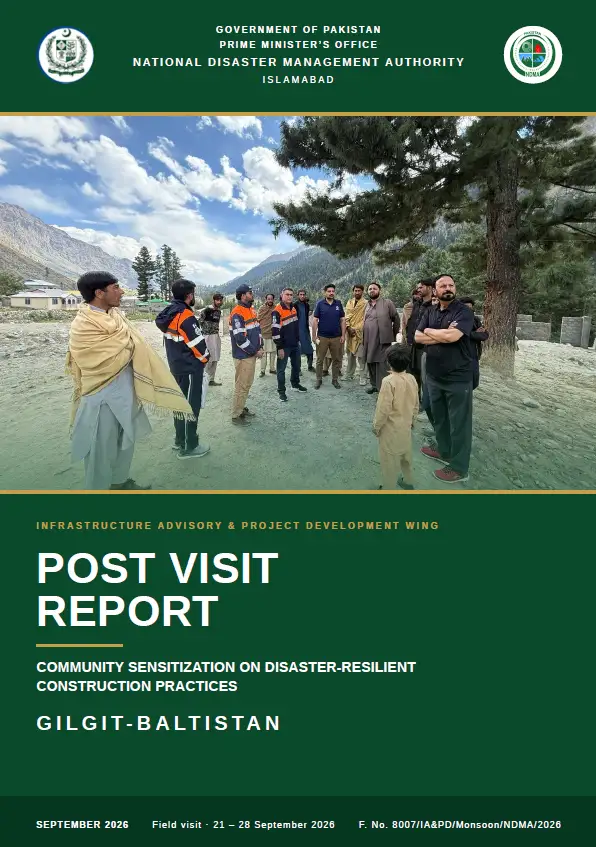
Community Sensitization on Resilient Structures Gilgit Baltistan
The IA&PD Wing of NDMA conducted a seven-day field visit (21–28 September 2026) across Astore, Ghizer and Gilgit districts, covering 650 km and reaching about 600 families to promote disaster-resilient construction. The team assessed damage from debris flows, riverine erosion and high groundwater, met district administrations, observed affected settlements and temporary relocations, and reviewed alternative housing options such as Air-Crete dome structures. Findings highlighted the need for multi-hazard assessments, structured resettlement, climate-informed planning and a shift from pure restoration to risk reduction; the report offers seven recommendations on land-use planning, resilient reconstruction, avoidance of high-risk sites, continued sensitisation and stronger district coordination to support “build back better” outcomes.
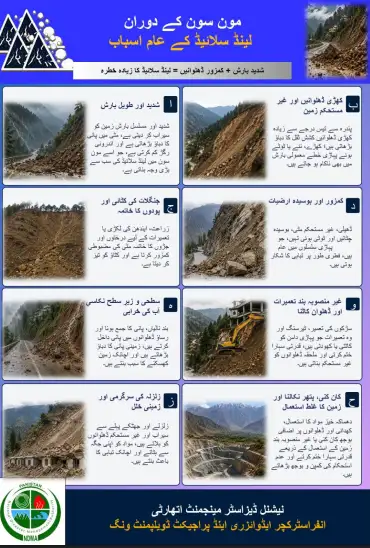
Landslide Infrastructure Advisory - 2026
In view of the ongoing monsoon season, the Infrastructure Advisory & Project Development (IA&PD) Wing of the National Disaster Management Authority (NDMA) has issued a Landslide Infrastructure Advisory highlighting the key factors contributing to increased landslide risk in mountainous regions. The advisory identifies intense and prolonged rainfall, unstable slopes, deforestation, erosion, water saturation, unplanned construction, and seismic activity as major contributing factors.
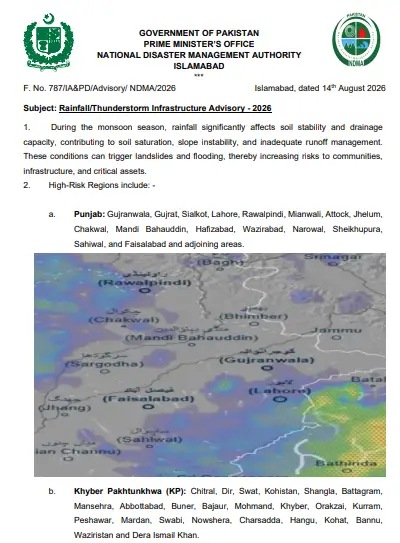
Rainfall/Thunderstorm Infrastructure Advisory - 2026
In view of the ongoing monsoon season, the Infrastructure Advisory & Project Development (IA&PD) Wing of the National Disaster Management Authority (NDMA) has issued a Rainfall/Thunderstorm Infrastructure Advisory – 2026. The advisory highlights that intense rainfall can lead to soil saturation, slope instability, inadequate runoff management, landslides, and flooding, posing significant risks to communities, infrastructure, and critical assets.
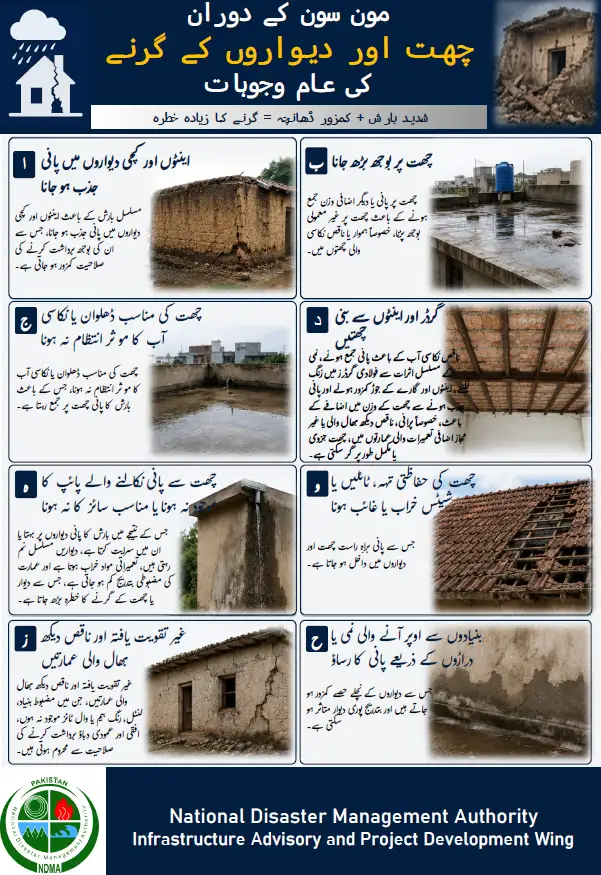
Infrastructure Advisory for Prevention of House Collapses during Remaining Spells of Monsoon 2026 (Urdu)
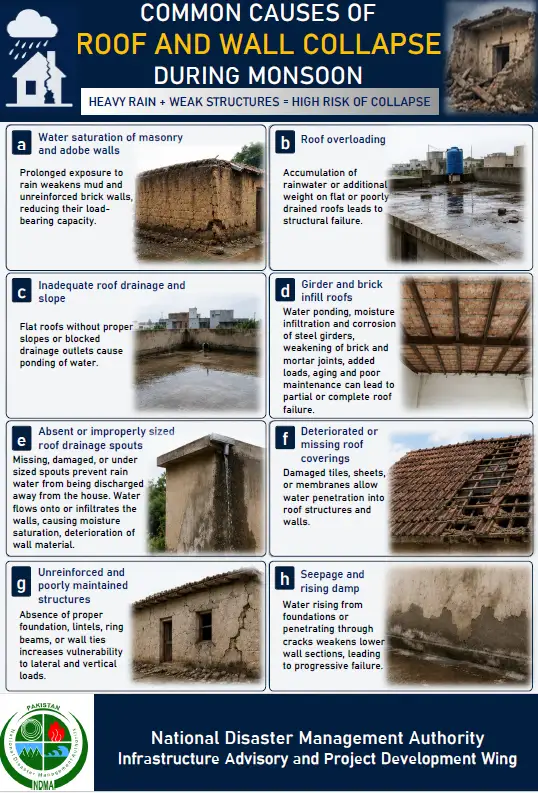
In view of the ongoing monsoon season, the Infrastructure Advisory & Project Development (IA&PD) Wing of the National Disaster Management Authority (NDMA) has issued an Infrastructure Advisory for the Prevention of House Collapses during the remaining spells of Monsoon 2026. The advisory highlights that prolonged rainfall, water infiltration, inadequate roof drainage, roof overloading, and poor structural maintenance significantly increase the risk of roof and wall collapses, particularly in unreinforced masonry, adobe (kacha), and aging buildings. It outlines key structural vulnerabilities, recommends practical strengthening and maintenance measures for residential houses, promotes community awareness on recognizing early signs of structural failure, and urges all relevant government agencies to implement these preventive actions to safeguard lives and improve the resilience of residential infrastructure throughout the monsoon season.
Infrastructure Advisory for Prevention of House Collapses during Remaining Spells of Monsoon 2026 (English)
In view of the ongoing monsoon season, the Infrastructure Advisory & Project Development (IA&PD) Wing of the National Disaster Management Authority (NDMA) has issued an Infrastructure Advisory for the Prevention of House Collapses during the remaining spells of Monsoon 2026. The advisory highlights that prolonged rainfall, water infiltration, inadequate roof drainage, roof overloading, and poor structural maintenance significantly increase the risk of roof and wall collapses, particularly in unreinforced masonry, adobe (kacha), and aging buildings. It outlines key structural vulnerabilities, recommends practical strengthening and maintenance measures for residential houses, promotes community awareness on recognizing early signs of structural failure, and urges all relevant government agencies to implement these preventive actions to safeguard lives and improve the resilience of residential infrastructure throughout the monsoon season.