

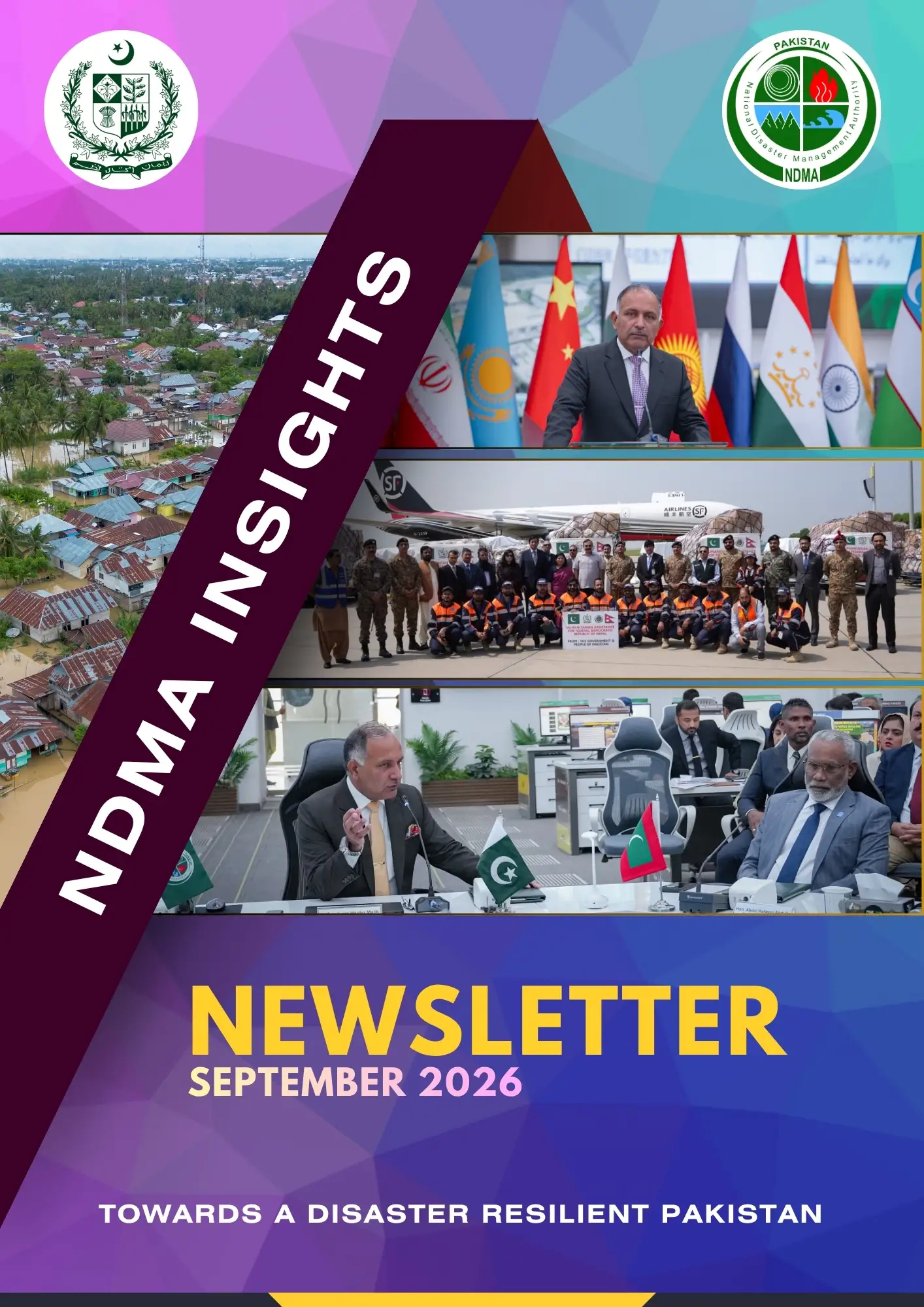
NEWSLETTER SEPTEMBER 2026 Latest
NEWSLETTER SEPTEMBER 2026
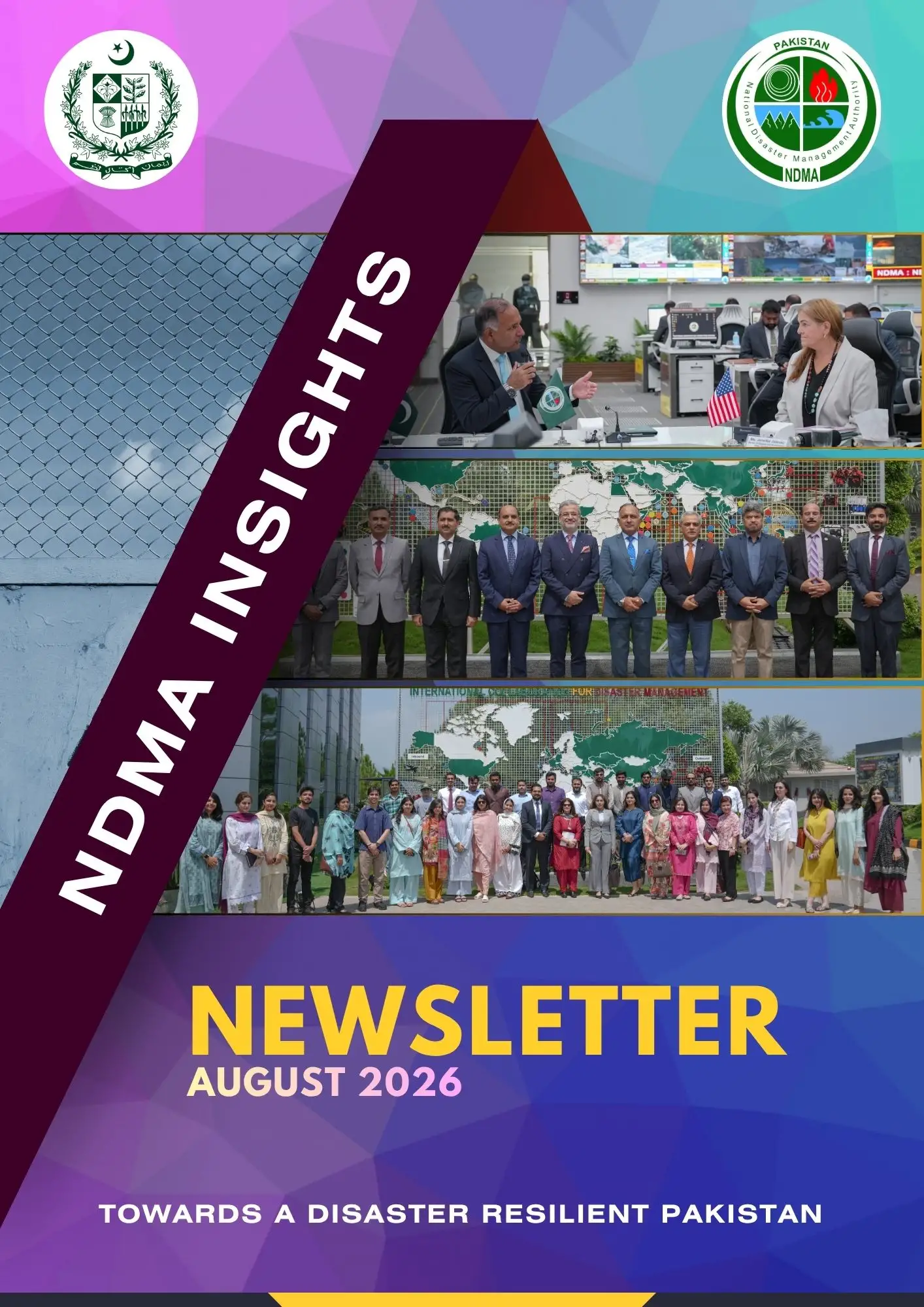
NEWSLETTER AUGUST 2026
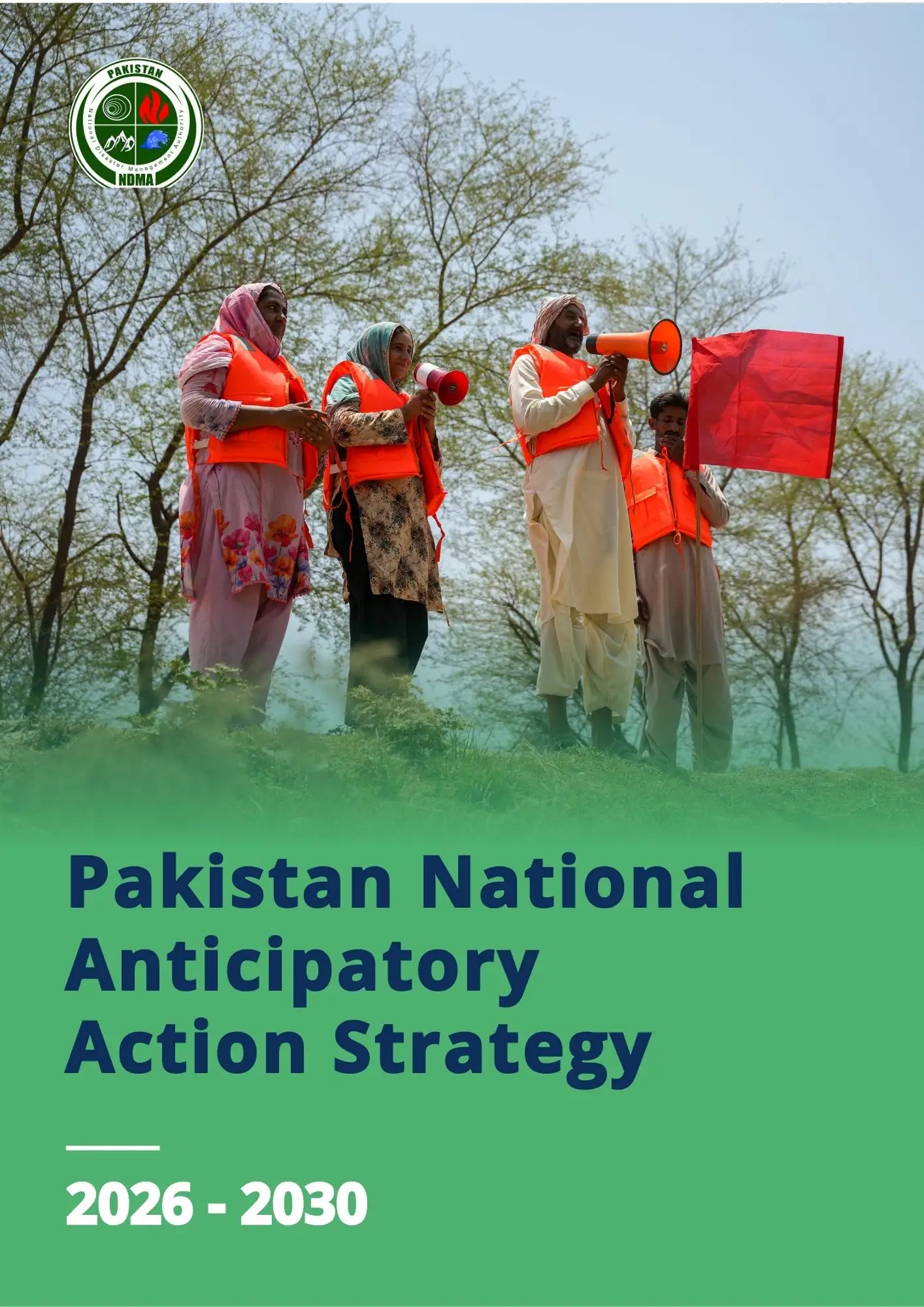
Pakistan National Anticipatory Action Strategy 2026 - 2030
The National Anticipatory Action Strategy (2026–2030) establishes an operational framework to enable forecast-based, early action by government institutions before hazard impacts escalate into disasters. The Strategy does not introduce new structures; rather, it strengthens existing disaster risk management systems by embedding trigger-based decision-making, pre-arranged financing, and coordinated implementation mechanisms across federal, provincial, and district levels.The strategy is structured around five interdependent pillars:(i) Risk Information, Early Warning and Trigger Systems;(ii) AA planning & Operational Delivery;(iii) Pre-Arranged Financing;(iv) Governance, Coordination and Implementation; and(v) Evidence Generation and Capacity Building.Together, these pillars establish a rules-based system where credible forecasts trigger predefined actions and financing within defined institutional mandates.
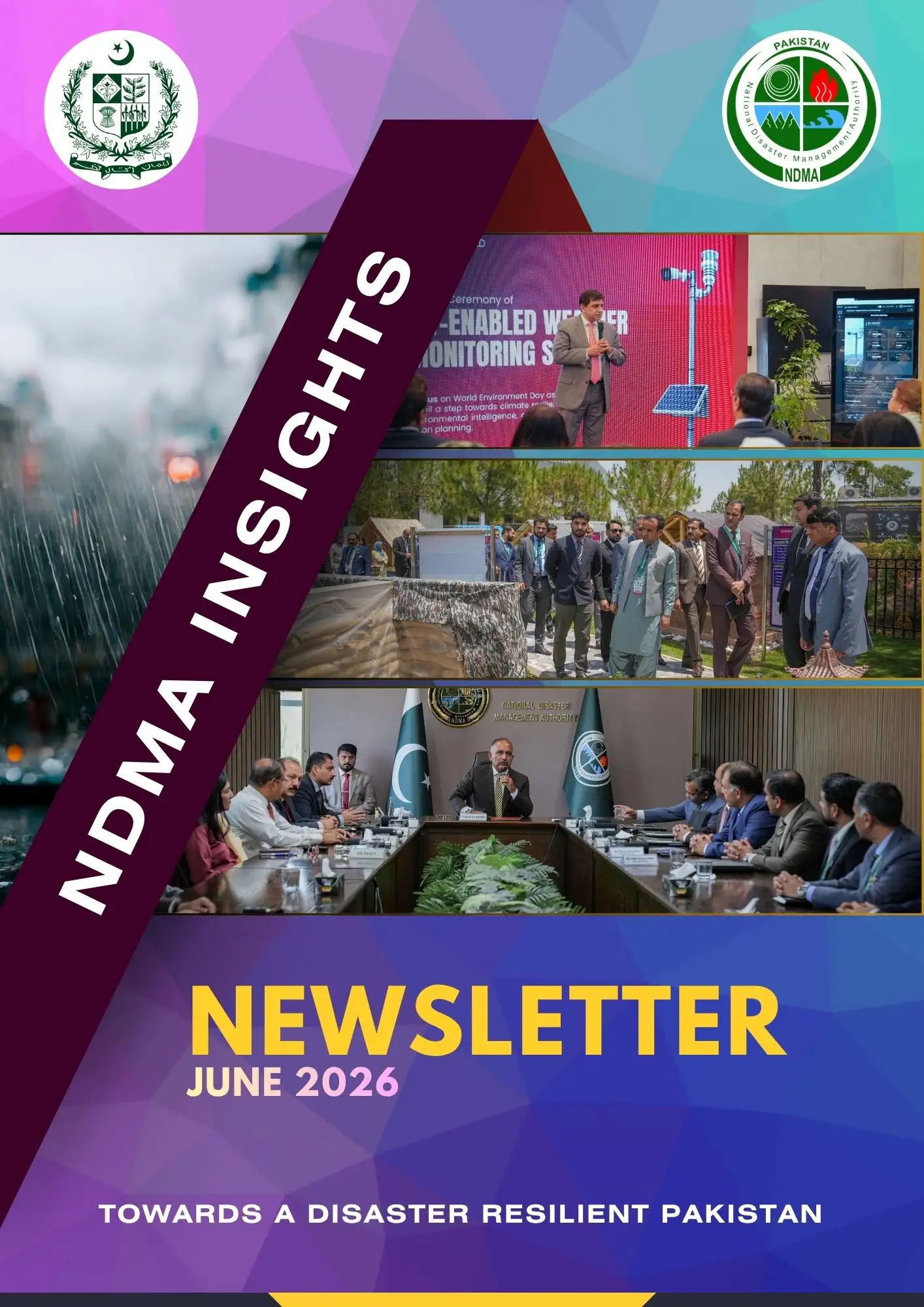
NEWSLETTER JUNE 2026
NEWSLETTER JUNE 2026
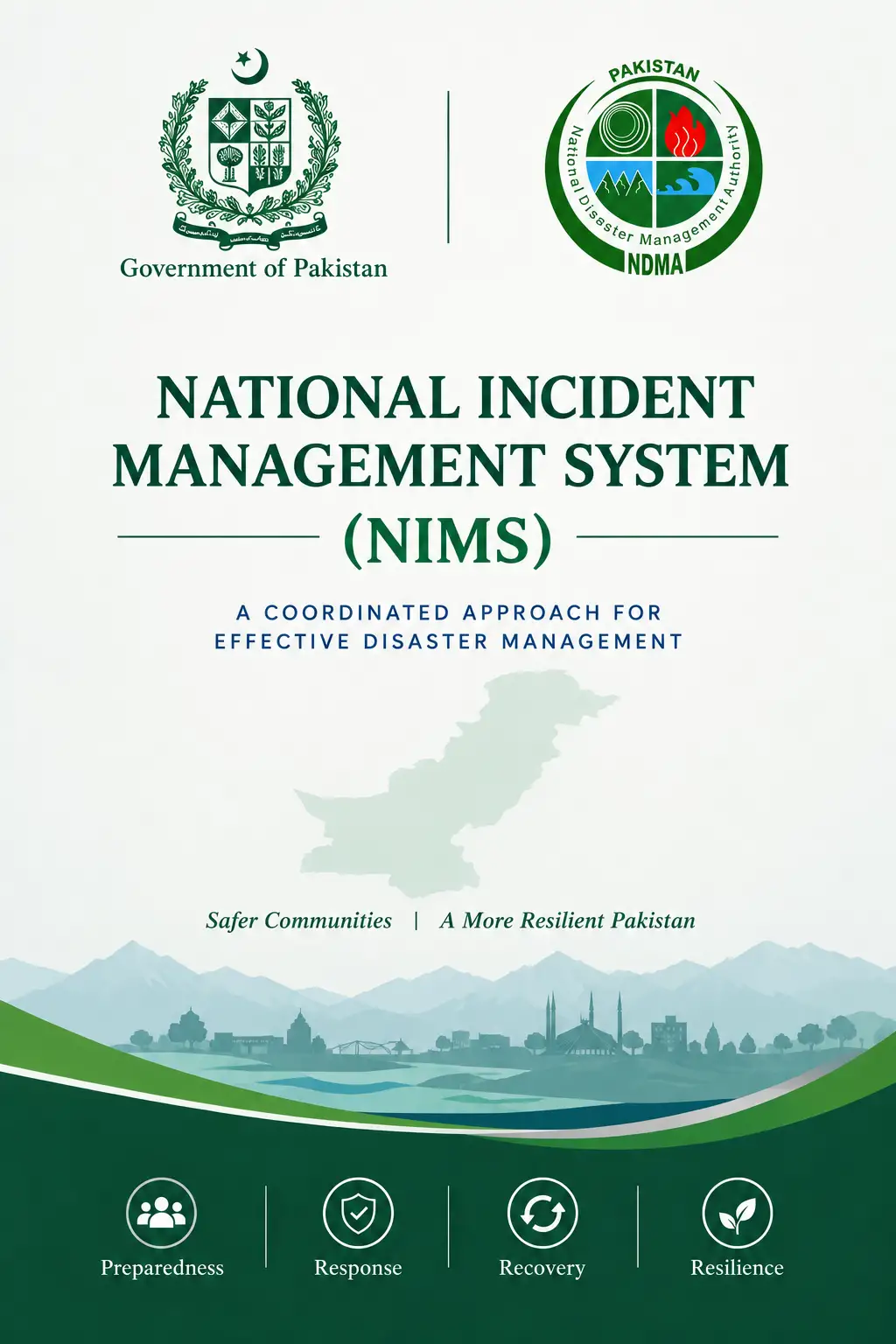
Pakistan National Incident Management System (PAK-NIMS)
Pakistan is in one of the highest geographic risk locations, and the intensity and frequency of disasters is expected to increase due to climate change leading to increased social-economic pressures and placing vulnerable populations at greater risk. In the last decade, the country has made significant efforts to move from a reactive to a proactive approach focusing on comprehensive emergency preparedness and response capability. After evaluating past disasters and conducting a gap analysis, it was validated that the National Disaster Management Authority (NDMA) has a strong organizational foundation that was further expanded with the establishment of the state-of-the-art National Emergencies Operation Center (NEOC) in October 2023. The NEOC and the supporting system and capabilities of the NDMA wings have proven to be very good, especially in coordination at the federal level. However, the analysis identified certain horizontal gaps that need to be improved and major gaps in the vertical aspects of the national disaster management system, especially at the district level, including institutional capacity for gender-responsive and inclusive disaster management.To address those gaps, NDMA is adapting a holistic, inclusive, and integrated system based on the best global practices that will help enhance the existing disaster management structure. Doing so will make the NEOC function even more effectively and provide transformational change to provincial and district disaster management capabilities.